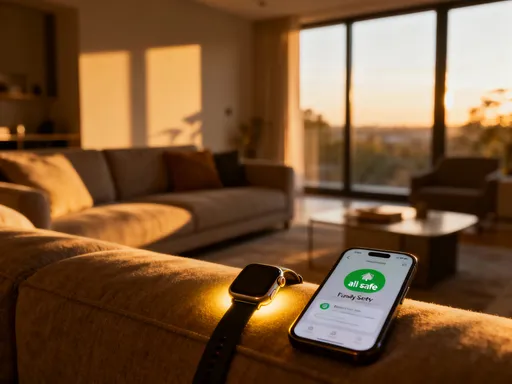
You know that moment when you’re standing in the kitchen, recipe in one hand, phone in one hand, trying to scan a blurry ingredient list? Or when your child’s permission slip gets lost in a pile of papers, and you panic? I’ve been there. But lately, something small has made a big difference — not with flashy promises, but with quiet, consistent help. Scanning tools used to feel like tech for tech’s sake. Now, they’ve become part of how I parent, work, and even breathe easier. Let me show you how.
The Morning Chaos: How Scanning Tamed My Paper Overload
Every morning used to start the same way — with me standing by the front door, one shoe on, coffee in hand, frantically searching through a mountain of papers for the one thing I needed. Was it the field trip form? The dentist reminder? The electric bill that was due yesterday? I’d shuffle through flyers, school notices, and envelopes I hadn’t opened in weeks, my heart racing as the clock ticked. I wasn’t lazy. I wasn’t careless. I was just overwhelmed. The system I had — a stack on the counter, a folder in the drawer, sticky notes everywhere — wasn’t working. And the guilt was real. I kept thinking, If I were just more organized, this wouldn’t happen.
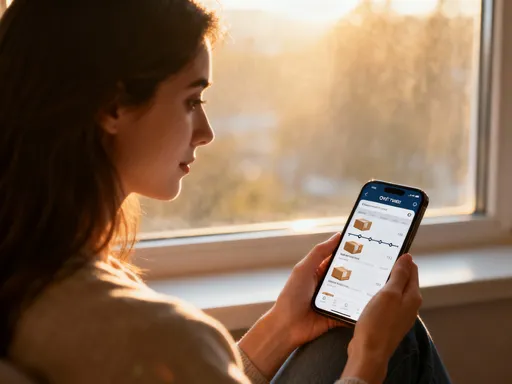
Then one Tuesday, I tried something simple. I opened my phone’s built-in scanning app — the one I’d only ever used to sign a document or send a quick copy to my sister — and I scanned the permission slip I’d just pulled out of my kid’s backpack. Instead of tossing it into the pile, I saved it to a folder labeled “School – Maya.” Just like that, it was safe. No more crumpled corners, no more coffee stains, no more losing it between the couch cushions. That night, I went through the entire stack by the door. One by one, I scanned each paper: birthday party invites, PTA meeting reminders, warranty cards, even the takeout menu I’d been meaning to file. I created folders — “Kids’ School,” “Home,” “To Pay,” “Medical,” “Events” — and dropped each scan where it belonged.
Now, I don’t wait. The second a piece of paper comes into the house, I scan it. If it’s trash, it goes straight to the bin. If it matters, it goes into my phone. I don’t have to remember where I put it. I don’t have to worry about my kids losing it. And when the school calls asking for the immunization form, I pull it up in three seconds. That feeling of constant panic? It’s gone. Not because I changed — because the system finally did. I realized I wasn’t failing at organization. I was just using the wrong tools. And this one? It fits right in my pocket.
Cooking Without the Clutter: From Printouts to Instant Digital Recipes
I’ve always loved cooking. There’s something about the rhythm of chopping, the smell of onions sizzling, the way a family gathers around the table that feels like love made visible. But I hated the mess that came with it — especially the recipe chaos. I’d print out recipes from the internet, only to have them smeared with tomato sauce or torn at the edge where I’d folded them too many times. My handwritten notes in the margins — “add more garlic,” “bake 10 minutes longer” — would blur after one splash of broth. I once spent an entire Sunday trying to recreate my mom’s lentil soup, only to realize I couldn’t read my own handwriting. I gave up and ordered pizza. Again.
Then I started using my phone to scan recipes — not just from websites, but from old cookbooks, handwritten index cards, even restaurant menus when I tasted something amazing. With optical character recognition, the text turns into clean, editable words. I can search for “chicken” or “gluten-free” and find exactly what I need. I created a folder called “Family Favorites” and started adding them one by one. My grandmother’s cinnamon rolls. My husband’s famous chili. The zucchini bread my daughter made for her first bake sale. Each one scanned, saved, searchable.
Last month, my niece asked, “Auntie, do you have Grandma’s apple pie recipe?” My heart jumped. I opened my phone, typed “apple pie,” and there it was — the same stained card she used to pull from her apron, now preserved in perfect clarity. I sent it to her with a smile. This isn’t just about convenience. It’s about keeping memories alive in a way that’s actually useful. No more lost recipes. No more guessing. Just the joy of cooking, without the clutter.
Learning Made Lighter: How My Teen and I Use Scanning to Stay on Track
When my daughter Maya started high school, her backpack looked like it could double as luggage. Five textbooks, three binders, a water bottle, a snack bag, and a crumpled permission slip for the spring concert. Every evening, she’d drop it by the door with a groan, rubbing her shoulder. “It’s so heavy,” she’d say. “And I still lose things.” I’d watch her dig through pages of notes, trying to find the worksheet due the next morning, her voice tight with stress. I wanted to help, but how? I couldn’t carry her books for her. I couldn’t sit in class with her.
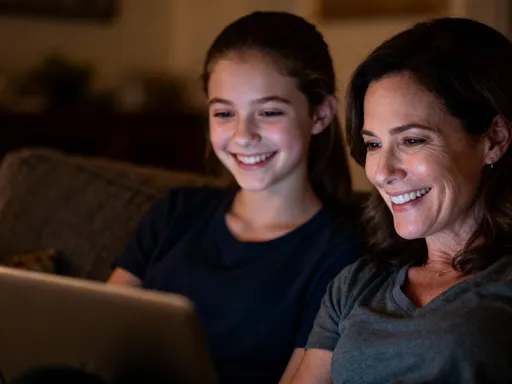
Then her history teacher mentioned that students could submit digital notes. That’s when it hit me — scanning could be her lifeline. We downloaded a simple, free scanning app and started using it together. After class, instead of stuffing handouts into her binder, she’d take a photo. Whiteboard notes? Scanned. Worksheets? Saved to a folder labeled “History – Semester 2.” She could highlight important dates, add voice notes, even convert the text to audio to listen to on the bus. I could check in — not to spy, but to support — and see what she’d captured, what she’d marked as important.
The change was instant. Her backpack was lighter. Her stress levels dropped. But more than that — she felt more in control. “I don’t feel like I’m drowning anymore,” she told me one night over dinner. And for me? I finally felt useful. I wasn’t nagging her to “get organized.” I was giving her a tool that worked with her life, not against it. Now, when she aces a test or finishes a project early, I see it as a small win for both of us. Scanning didn’t just help her learn — it helped us connect.
Travel with Calm: Keeping Tickets, IDs, and Reservations in One Place
I used to be the person printing everything. Boarding passes? Printed the night before. Hotel confirmation? Printed. Car rental details? You bet. I’d show up at the airport with a folder full of papers, neatly clipped, color-coded if I was feeling fancy. And every single time, something would go wrong. I’d lose the boarding pass in security. The hotel printout would fall out of my purse. Once, in Denver, I realized I’d left the rental agreement at home. I stood at the counter, sweating, while the agent tried to pull up our reservation. I felt so unprepared. So embarrassed.
Now, I travel with my phone — and only my phone. As soon as I book a trip, I scan every confirmation, every ticket, every reservation detail into a folder labeled with the trip name — “Florida 2024,” “Chicago Visit,” “Mom’s Birthday Trip.” I even scan a copy of my passport and driver’s license and store them in a secure section. Not because I expect to lose them — but because I don’t want to panic if I do.
Last winter, we had a last-minute delay in Chicago. The gate changed, the flight was rescheduled, and suddenly, they needed ID to reissue our boarding passes. I reached into my bag — no wallet. It was in my coat, which was in the overhead bin. But I didn’t panic. I opened my phone, tapped twice, and showed them the scanned copy of my license. Done. No stress. No delay. That’s the power of this little habit — it doesn’t make me tech-savvy. It makes me calm. And when you’re traveling with kids, or aging parents, or just trying to enjoy a vacation, calm is everything.
Helping My Parents Age Gracefully — From a Distance
My mom lives three hours away, and while she’s sharp as ever, her eyes aren’t what they used to be. Reading small print — medication labels, utility bills, event flyers — has become a struggle. Last year, she called me in a panic. “I can’t read these instructions,” she said. “It says when to take the pills, but the words are so tiny.” I drove over that weekend, enlarged the text on my phone, and wrote it out for her in big letters. But I knew I couldn’t do that every time.
So I taught her how to scan. Now, when she gets a new prescription, she takes a photo of the label. I help her use the app to zoom in, increase contrast, or convert the text to speech. She can hear the dosage read aloud. We’ve scanned her medical forms, her insurance cards, even the schedule for her book club. It’s not just about seeing better — it’s about feeling independent. She doesn’t have to wait for me to visit. She doesn’t have to feel like a burden.
And for me? It’s peace of mind. I can’t be there every day, but I can help her stay on top of things with a few taps on my phone. When she sends me a scanned copy of her electricity bill and says, “Does this look right?” I can review it, make sure nothing’s wrong, and send it back. These little moments — quiet, simple, invisible to anyone else — are how I care for her now. Technology didn’t replace our relationship. It made it stronger.
Work Without the Weight: Turning Meetings into Action in Seconds
I used to leave meetings exhausted — not from the conversation, but from the aftermath. My notebook would be full of scribbles: half-finished sentences, arrows pointing everywhere, doodles in the margins. By the time I got back to my desk, half of it was unreadable. “What does ‘Q3 rev?’ mean?” I’d mutter. “Was that a deadline or a question?” I’d spend an extra hour just trying to decode my own handwriting. And if I forgot my notebook? Disaster. I’d have to rely on memory — and we all know how that goes.
Now, I bring my phone. When someone writes on the whiteboard, I take a photo. When I get a handout, I scan it. In seconds, the app turns my messy photo into clean, searchable text. I can highlight action items, add notes, and share a clear summary with my team before the meeting even ends. No more guessing. No more follow-up emails asking, “What were we supposed to do again?”
It’s made me more reliable. My colleagues know they can count on me to send the recap. It’s made me more efficient — I spend less time deciphering notes and more time actually doing the work. And honestly? It’s made me feel smarter. Not because I remember more, but because I don’t have to. My phone remembers for me. And that small shift — from trying to hold everything in my head to letting a tool help me carry it — has lifted a weight I didn’t even know I was carrying.
The Quiet Revolution: When Tech Becomes a Part of You
None of this feels like “using technology.” It doesn’t feel like I’m mastering some complex system or learning a new language. It feels like living — just smoother. These tools didn’t change my life in a single moment. There was no big reveal, no dramatic transformation. They just slipped in, quietly, like a good pair of slippers. They didn’t ask for attention. They just helped.
I used to think smart tech had to be flashy — voice assistants shouting from the kitchen, apps sending constant notifications, gadgets that did too much and broke too easily. But the tools that have made the biggest difference are the ones I barely notice. The scanner in my phone. The way it turns paper into peace of mind. The way it helps me care for my family, support my daughter, stay close to my mom, and show up at work without feeling scattered.
That’s the real promise of technology — not to impress us, but to disappear. When it fades into the background of our lives, that’s when it’s working best. It’s not about being futuristic. It’s about being present. Present with my kids at dinner. Present with my mom on the phone. Present with my work, my home, my life.
I didn’t know how much I needed this quiet help — until it was there. And now? I can’t imagine going back. Because the best tech isn’t the kind that shouts. It’s the kind that whispers, “I’ve got this,” so you can breathe, relax, and focus on what really matters.