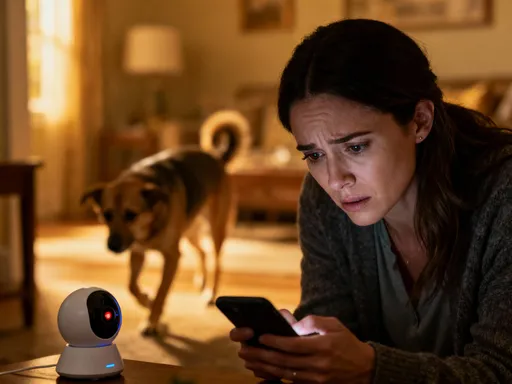
Imagine getting a ping on your phone that your dog is pacing anxiously—before you even knew he was home alone. Or seeing a quiet alert that your cat hasn’t touched her water bowl in hours. With today’s smart pet monitors, you’re not just watching your pets—you’re understanding them. These devices don’t just stream video; they learn behaviors, spot changes, and help protect what matters most: your pet’s well-being. And honestly? Peace of mind is priceless when it comes to family.
The Quiet Worry No One Talks About
You leave for work every morning with a kiss on the head, a quick scratch behind the ears, and a cheerful “Be good!” But as you pull out of the driveway, a tiny voice in your head whispers: Is he okay? Did I leave enough water? Was that cough just a tickle, or something more? We don’t talk about it much, but that low hum of worry is real—especially when your pet is part of the family. You love them deeply, but love doesn’t always come with answers.
I remember coming home one rainy afternoon to find my golden retriever, Max, curled up in a corner, not his usual sunny self. His tail didn’t wag, and he barely lifted his head. I thought he was just tired—until I realized he hadn’t eaten all day. It turned out to be a mild stomach bug, nothing serious, but that moment stuck with me. How long had he been feeling off? Could I have known sooner? So many of us live with these “what ifs,” especially when our pets can’t speak in words. They show us through behavior—through a limp, a change in appetite, a restless night. But when we’re not home, those signs go unseen.
And it’s not just illness. Separation anxiety, boredom, overheating, dehydration—these are silent stressors that build up when we’re not there. A dog might bark nonstop when left alone, or a cat could stop grooming herself, both signs of emotional or physical discomfort. The truth is, even the most attentive pet owner can’t be there 24/7. That doesn’t mean we stop caring. It just means we need tools that help us stay connected, not out of guilt, but out of love. Because knowing what’s going on, even from a distance, can make all the difference.
How Technology Steps In—Without Taking Over
Think of today’s pet tech not as a replacement for your instincts, but as a partner in care. It’s like having a thoughtful neighbor who checks in on your home while you’re away—but one who knows your pet’s habits better than anyone. Modern pet monitors don’t just show you what’s happening; they help you understand it. And the best part? They do it quietly, without turning your home into a lab or your pet into a science experiment.
Take smart cameras, for example. These aren’t your old-school security cams that just record blurry footage. Today’s models use motion tracking and sound detection to notice when your dog is barking more than usual, or when your cat jumps up on the counter at 3 a.m.—again. Some even send alerts if they detect whining or unusual stillness. One friend told me she got an alert that her senior dog hadn’t moved in over two hours. She called a neighbor to check, and they found he’d gotten stuck behind the couch. A small thing, but it could’ve been serious.
Then there are smart collars—devices that track activity, rest, and even body temperature. They work a lot like fitness trackers for humans, but tuned to your pet’s biology. If your dog usually walks 5,000 steps a day and suddenly drops to 1,000, the app might gently suggest, “Your dog is less active than usual.” It’s not diagnosing anything, but it’s giving you a nudge to pay attention. Similarly, smart feeding bowls can tell you when your cat last ate or drank, which is especially helpful after surgery or for pets with chronic conditions.
The magic isn’t in the tech itself, but in how it learns what’s normal for your pet. Over time, these devices build a picture of your dog’s routine, your cat’s sleep patterns, your rabbit’s feeding habits. When something shifts—even slightly—you’re the first to know. And that’s where real care begins: not with panic, but with awareness.
Choosing What Fits Your Life (Not Just Your Pet)
Here’s the truth: not every gadget is right for every home. Just because something exists doesn’t mean you need it. The key is finding tools that fit into your life like a good pair of slippers—comfortable, useful, and easy to use. It’s not about having the most advanced setup; it’s about having the one that actually works for you.
If you’re a busy parent juggling work, kids, and dinner prep, you probably don’t want to spend hours reviewing footage or decoding complex alerts. What you need is simplicity—maybe just one camera in the living room that sends a quick notification if your dog barks during the day. Some apps even let you set “quiet hours” so you’re not getting pings at 2 a.m. about a cat walking across the floor. It’s about getting the right information at the right time, not every single detail.
For someone with an older pet, the needs might be different. My aunt, who has a 12-year-old Labrador, uses a smart collar that tracks mobility. She gets weekly reports showing how much he’s moving, resting, and sleeping. When she noticed a drop in his activity over a few days, she called the vet—and they caught early arthritis before it got worse. For her, it’s not about surveillance; it’s about staying one step ahead of age-related changes.
And if you have multiple pets, like two cats who barely tolerate each other, you might want a system that can tell them apart. Some cameras use facial recognition for pets—yes, really—to show you which one is eating, which one is scratching the couch, or which one hasn’t touched their water. That kind of detail can help spot problems early, like one cat bullying the other away from food.
The bottom line? Start small. Ask yourself: What’s my biggest worry? What would make me feel more at ease? Then look for a tool that answers that one question well. You don’t need a full smart home for pets. You just need one thing that helps you breathe a little easier.
Setting Up Your System Without the Stress
Let’s be honest—tech can feel overwhelming. The boxes, the apps, the passwords, the “syncing”… it’s enough to make you want to toss the whole thing in a drawer. But setting up a pet monitoring system doesn’t have to be complicated. In fact, most of today’s devices are designed with regular people in mind—people who just want to keep an eye on their furry family members, not become IT experts.
Start with one device. Maybe it’s a camera that clips to your bookshelf or sits on a table. Place it at your pet’s level—not too high, not too low—so you can actually see their face and body language. Point it toward their favorite spot: the couch, the window, the food bowl. And give it a name in the app, like “Max’s Lounge” or “Luna’s Sun Patch.” It sounds silly, but it makes the system feel more personal, more human.
Next, connect it to your Wi-Fi. Most apps walk you through this step by step. If you get stuck, there’s usually a help button or a short video tutorial. And don’t worry—your data is encrypted. Reputable brands don’t share your video or activity logs with third parties. Your pet’s naps are private.
Once it’s up and running, customize the alerts. You probably don’t need to know every time your cat blinks, but you might want a notification if they haven’t moved in four hours or if the room gets too hot. Some systems let you link to voice assistants like Alexa or Google Home, so you can say, “Show me the living room,” and see your pet on a smart display. It’s a small thing, but it makes checking in feel effortless.
And here’s a tip: don’t try to monitor everything at once. Start with one camera, one alert, one habit. Let yourself get used to it. You’re not trying to watch your pet like a hawk—you’re building a safety net. Over time, you’ll learn what matters and what you can ignore. The goal isn’t constant surveillance; it’s peace of mind with balance.
When Alerts Actually Helped
Sometimes, the smallest alert can lead to the biggest difference. These aren’t dramatic rescue stories or miracle cures—they’re real, quiet moments where technology helped a pet owner pay attention at just the right time.
Take Sarah, a teacher in Ohio, who got a notification from her dog’s smart collar that his heart rate was elevated. He’d been acting fine that morning, but the data showed a spike midday. She called her neighbor to check, and they found he’d eaten part of a toy and was showing early signs of a blockage. At the vet, they removed it before it became an emergency. “The collar didn’t save his life,” she said, “but it gave me the push to act sooner.”
Or consider James, who lives alone with his cat, Miso. After Miso had dental surgery, James used a smart water bowl that tracks intake. For two days, the app showed she hadn’t drunk much. He offered wet food, used a dropper, and finally took her back to the vet, where they found she was still in pain and needed a medication adjustment. “I would’ve thought she was just tired,” he said. “But the numbers didn’t lie.”
Then there’s Maria, who has two dogs. Her younger one, a border collie, started pacing at night. The camera showed it happening around 2 a.m. every few days. At first, she thought it was a dream. But when the pattern continued, she mentioned it to her vet, who suggested a possible neurological issue. They got an early diagnosis and started treatment. “I never would’ve noticed if I wasn’t seeing the footage,” she said.
In each case, the tech didn’t replace the vet. It didn’t diagnose or treat. But it did something powerful: it turned invisible moments into visible clues. And sometimes, that’s all you need to make a difference.
Building Trust Between You, Your Pet, and the Tech
Here’s something I’ve learned: the best tools don’t take over—they support. And that’s especially true with pet tech. It’s easy to become dependent, to check the app every five minutes, to worry every time an alert pops up. But that’s not healthy—for you or your pet. The goal isn’t to live through a screen. It’s to use technology as a bridge, not a barrier, between you and your animal.
Think of it like this: your instincts are the foundation. You know your pet’s personality, their quirks, their favorite blanket. The tech is the helper—the extra set of eyes, the memory that never forgets. When they work together, you get something stronger: informed care. But if you lean too hard on the data, you might miss the big picture. An alert says your dog is inactive, but maybe he’s just enjoying a lazy Sunday. The numbers matter, but so does context.
That’s why it’s important to set boundaries. Maybe you check the camera once in the morning and once at night. Maybe you review weekly reports instead of daily ones. And always, always pair what you see with real-world observation. If the app says your cat is drinking less, watch her behavior. Is she hiding? Licking her lips? Acting restless? Those signs, combined with the data, give you a fuller picture.
And never forget the vet. These tools are great for spotting changes, but they’re not a substitute for professional care. Think of them as a way to have better conversations with your veterinarian—more detailed, more timely. Instead of saying, “I think something’s off,” you can say, “Here’s his activity level over the past week, and here’s when the pacing started.” That kind of information is gold.
Tech, at its best, is a translator. It helps you understand your pet’s silent language. But you’re still the one who loves them, who feeds them, who holds them when they’re scared. No app can replace that.
Protecting What Matters Most—Peace of Mind Included
At the end of the day, pet monitoring tech isn’t about gadgets or data. It’s about connection. It’s about knowing that even when you’re at work, running errands, or visiting family, you’re still part of your pet’s day. You’re still looking out for them. And that feeling—of being close, even when you’re apart—is worth its weight in gold.
We already do so much to keep our pets safe: we buy quality food, we schedule vet visits, we dog-proof the backyard. Smart monitoring is just another layer of care, like a smoke detector for your home or a car seat for your child. It’s not about fear. It’s about love in action.
And the peace of mind? It’s real. It’s the difference between wondering, “Is he okay?” and knowing, “She’s resting in the sun, just like always.” It’s the quiet relief of seeing a familiar face on your phone screen, tail wagging, ears up, ready for dinner. It’s the confidence that if something changes, you’ll be the first to know.
You don’t need to turn your home into a high-tech fortress. You just need one small step—a camera, a collar, a bowl—that helps you feel more connected, more informed, more in tune. Because your pet isn’t just an animal. They’re family. And family deserves every tool we have to keep them safe, healthy, and loved—even when we’re not in the same room.
So ask yourself: what would it feel like to worry a little less? To know a little more? Maybe it’s time to let technology help you love your pet, just a little more deeply.