Have you ever waited for an online order, constantly checking your email, wondering if it shipped, or worse—realized it was delivered but you missed it? I used to live that stress. Packages lost, deadlines missed, family gifts arriving late. Then I discovered order tracking apps. They didn’t just notify me—they organized my shopping life. Now, I know where every package is, without chasing updates. This isn’t about tech for tech’s sake. It’s about saving time, reducing stress, and feeling in control. Let me show you how a simple tool made my days calmer and my life more predictable.
The Hidden Chaos of Online Shopping: When "Ordered" Doesn’t Mean "Under Control"
Remember that time you bought a birthday gift online, clicked "place order" with a smile, and then—nothing? No updates. No movement. Just silence. That’s how it started for me. I thought online shopping was about convenience, but I quickly learned it came with its own kind of quiet chaos. You hit buy, and then your brain takes over, turning into a walking reminder system: "Did it ship yet? Was there a delay? Did they leave it at the door?"
It’s not just the waiting. It’s the mental clutter. Every untracked order becomes a tiny weight on your shoulders. I remember one Mother’s Day when I ordered a special plant for my mom, only to find out two days later it was marked as delivered—but no one had seen it. Turns out, the carrier left it by the back gate, where it sat through rain and sun until I drove over and rescued it. The plant survived. My confidence in my own organization? Not so much.
Then there’s the domino effect. You’re waiting on a kitchen part, so dinner prep is delayed. Or you’re expecting workout gear before a weekend hike, and instead, you’re rearranging plans last minute. And let’s not forget the time spent—calling customer service, digging through email folders, typing in tracking numbers one by one. It adds up. I once counted and realized I was spending over an hour a week just checking on packages. An hour! That’s time I could’ve used reading, resting, or just breathing.
The truth is, the ease of buying online often masks the mess that follows. And for someone like me—juggling family schedules, home care, and trying to carve out a little peace—this invisible load was starting to feel heavy. I didn’t need more things. I needed clarity. I needed to know that when I bought something, it wasn’t disappearing into a black hole. I needed to feel, just once, like I was actually on top of things.
Discovering the Shift: My First Real Encounter with an Order Tracking App
It started with a friend’s casual comment. We were catching up over coffee, and I mentioned—again—how I’d missed a delivery that morning. She looked at me and said, "Wait, you don’t use a tracking app?" I laughed. I thought she meant those one-off email notifications. But she showed me her phone—her order tracking app—with a clean dashboard showing every shipment, color-coded, with delivery windows and real-time maps. I was stunned. It looked like something a logistics manager would use, not a mom who just wanted to know when her toothbrush head was arriving.
That night, I downloaded one of the popular apps, mostly out of curiosity. The setup took less than five minutes. I connected it to my main email account, gave permission to scan for shipping confirmations, and that was it. No forms. No complicated settings. I went to bed skeptical—surely, this wouldn’t actually work. But the next morning, I opened the app and saw it: every order I’d placed in the last six months, neatly organized. Some already delivered. Others on the way. One even flagged as delayed—with a reason.
I remember sitting at the kitchen table, coffee in hand, just scrolling through it. It felt like someone had handed me a flashlight in a dark room. For the first time, I could see everything. Not guess. Not hope. See. And that changed everything. The anxiety didn’t vanish overnight, but it began to loosen its grip. When the app notified me that a package would arrive between 2 and 4 p.m., I didn’t panic. I adjusted my afternoon. I even texted my teenager to grab it when he got home from school. No missed deliveries. No frantic calls. Just calm.
What surprised me most wasn’t the technology—it was the emotional shift. I stopped feeling like a victim of the shipping process and started feeling like I was part of it. Like I had a seat at the table. And that small sense of control? It spilled over into other parts of my day. If I could manage this, maybe I could manage other things too.
How It Actually Works: No Tech Skills Needed, Just Smart Design
Let me be honest—I’m not a tech expert. I don’t understand backend systems or API integrations. But here’s the beautiful part: you don’t need to. These apps are built for people like us, the ones who just want to live easier. Think of it like this: your email is a mailbox full of random letters, some important, some junk. Now imagine a helpful assistant who opens every envelope, pulls out the shipping notices, puts them in order, and puts them on your kitchen counter every morning. That’s what these apps do—but silently, automatically, and without asking for coffee.
When you link your email, the app scans for keywords like "your order has shipped" or "delivery update" from major retailers. It pulls the tracking number, connects to the carrier—USPS, FedEx, UPS, DHL, you name it—and builds a timeline. You don’t have to click a single link or type a code. It just happens. Some apps even work with your Amazon, Walmart, or Target accounts, so orders from those platforms sync directly, even if the email gets filtered or lost.
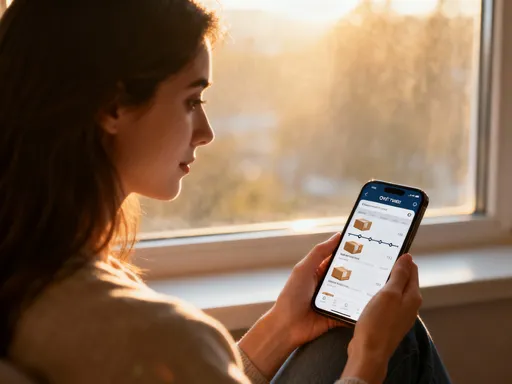
The interface is simple. You open the app, and you see a list. Each order shows the item, the store, the expected delivery date, and a progress bar. Some even send push notifications: "Your package is out for delivery," "Left at your doorstep," or "Delayed due to weather." I’ve had mornings where I saw that delivery was rescheduled, so I didn’t waste time waiting. Other times, I got a heads-up that two packages were arriving the same day, so I made sure to clear the porch.
And the best part? It adapts to your life. You can turn off notifications for certain stores, or mute deliveries that aren’t urgent. Want to see only what’s arriving this week? You can filter that. Need to share a delivery window with a family member? You can forward the update with one tap. It’s not about adding another thing to your phone—it’s about making the things you already do a lot smoother. I’ve shown it to my sister, my mom, even my neighbor, and every one of them said the same thing: "Why didn’t I do this sooner?"
Saving Time, Saving Sanity: The Ripple Effects on Daily Life
At first, I thought this app was just about packages. But over time, I realized it was doing something bigger: it was giving me back my time and my mental space. I used to structure my afternoons around "maybe today is delivery day." Now, I plan with confidence. I know if I need to be home, and more importantly, I know when I don’t. That might sound small, but for someone managing a household, it’s huge.
I started using the delivery windows to organize my errands. If a package is coming at 3 p.m., I’ll plan to be back from grocery shopping by 2:30. If nothing’s arriving, I’ll take the longer route and stop by the library. I even began scheduling family time around it. My daughter once asked, "Why are we having movie night now?" I said, "Because Dad’s new jacket arrives tomorrow, and he might be out for a walk when it comes. Tonight, we’re free." She laughed, but she also noticed how calm I seemed.
The reduced stress wasn’t just mine. My family felt it too. No more last-minute scrambles to find a package. No more "Did you check the side gate?" texts at 7 p.m. And the number of times I’ve avoided calling customer service? I lost count. The app tells me if there’s a delay and often explains why—weather, high volume, customs check. That knowledge alone takes the edge off. I don’t feel helpless anymore. I feel informed.
But the real surprise was how it affected my shopping habits. When I could see how many things I’d ordered in a month, I started thinking twice before clicking "buy now." I noticed patterns—like how I’d order kitchen gadgets during stressful weeks. Seeing them all lined up in the app was a mirror. It didn’t shame me, but it made me more mindful. I began asking, "Do I really need this now? Can I wait?" That small pause made a big difference. I’m not perfect, but I’m more intentional.
Making It Your Own: Simple Steps to Start and Stick With It
If you’re thinking, "This sounds great, but I’m not sure where to start," I get it. I felt the same. So let me walk you through it, step by step, like I’m sitting across from you at the kitchen table.
First, pick an app. There are a few well-known ones that are free and highly rated. Look for one with good reviews, especially from people who mention ease of use. Download it. Open it. The first screen will probably ask you to connect an email account. Choose the one where you get most of your shopping confirmations. The app will ask for permission to scan incoming messages—that’s normal and safe. These apps don’t read your personal emails; they’re trained to spot only shipping-related content.
Once connected, give it a few minutes. It’ll start pulling in recent orders. You might be surprised how many you forgot about. Take a moment to look through them. If something shows up that’s already delivered, don’t worry—it’s just catching up on history. You can archive old deliveries or set the app to hide them automatically after a week.
Now, notifications. This is where some people get overwhelmed. The key is to customize. Go into settings and decide what alerts you want. I get notified only for out-for-delivery and delayed status. For low-priority items, I turn off alerts. You can also set "quiet hours" so your phone doesn’t buzz at 7 a.m. about a shoe shipment.
One worry I had was privacy. But I did some reading—these apps use encryption, and you can disconnect your email anytime. If you’re uncomfortable, you can even use a secondary email just for shopping. And if you forget to use the app? That’s okay. It runs in the background. You don’t have to open it every day. It’s like a silent partner, doing the work while you live your life.
Beyond Tracking: Unexpected Ways It Improved My Habits
I didn’t expect this little app to change how I think, but it did. When I could see all my orders in one place, I started noticing things—like how often I shopped, what I bought, and how quickly I forgot about some of it. There was a week where I saw four different orders from various stores, all for small things: a scarf, a phone case, a book, a set of towels. None were expensive, but together? That was a weekend grocery trip. And the carbon footprint of four separate deliveries?
I started using the app to batch my shopping. Instead of ordering one thing at a time, I’d wait and group items. I’d think, "I need socks and a lamp shade—can I get them together from one store?" Or I’d delay non-urgent purchases until I had other things coming. Fewer shipments. Less packaging. A smaller impact. I even started choosing stores with eco-friendly shipping options when I could. The app didn’t preach sustainability—it just made the consequences visible.
It also helped me budget. Not directly, but by making spending more transparent. I could see how much I’d spent monthly on online orders, even if they were from different sites. That awareness helped me adjust. I’m not tracking every dollar, but I’m more present with my choices. And because I’m not rushing to replace something I lost or forgot, I’m saving money too.
Most unexpectedly, it made me more patient. When I see a delay, I don’t panic. I check the app. It tells me why. I breathe. I adjust. That small pause—between impulse and reaction—is where growth happens. I’m calmer. More centered. And honestly, that calm has spilled over into how I talk to my family, how I handle surprises, even how I sleep.
A Calmer, Clearer Life—One Package at a Time
When I look back at my life before order tracking apps, I see a woman running in circles, trying to keep up with invisible threads. I was doing my best, but I was always one missed email away from chaos. Today, I’m not just surviving—I’m in control. Not because I’ve changed everything, but because I found one small tool that made a big difference.
This isn’t about being obsessed with packages or becoming a tech guru. It’s about choosing peace over panic. Predictability over guesswork. It’s about taking one area of daily stress and turning it into a win—quietly, consistently, without fanfare. And when you win in the small things, those wins add up.
I don’t check my email nervously anymore. I don’t dread the "where’s my order?" spiral. I open the app, see the timeline, and get on with my day. That freedom—of mind, of time, of energy—is priceless. And the best part? It’s available to anyone. You don’t need a special skill. You don’t need to spend money. You just need to try.
So if you’re feeling overwhelmed by the little things—if online shopping feels more like a chore than a convenience—know this: there’s a simpler way. Start small. Try one app. Give it a week. See how it feels to know, not wonder. Because sometimes, the most powerful tools aren’t the flashy ones. They’re the quiet helpers that let you live with a little more ease, a little more confidence, and a lot more peace. And isn’t that what we all deserve?