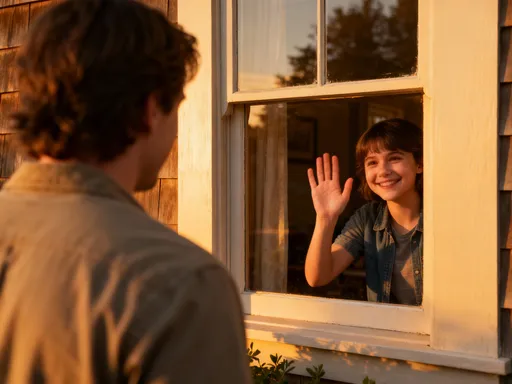
You know that sinking feeling when your teenager seems to live in a different world—behind a screen, headphones on, barely saying more than “fine” at dinner? I felt it too. Then I discovered something unexpected: online communities weren’t pulling us apart—they could actually bring us closer. It wasn’t about tech for tech’s sake. It was about finding real moments of connection in everyday digital spaces. At first, I thought the glow of the screen was stealing my child from me. But what if I’ve been looking at it all wrong? What if those same apps, forums, and shared digital corners weren’t walls—but windows? Windows into their world, their passions, their friendships. This is the story of how I stopped fighting the digital tide and started swimming with it—right beside my child.
The Moment I Realized We Were Drifting Apart
It wasn’t a dramatic fight or a slammed door that made me notice. It was silence. The kind that settles in when someone is physically present but emotionally miles away. My daughter, who used to burst through the front door with stories about her day—her friend’s joke, the teacher’s funny mistake, the dog that followed her home from school—now walked in quietly, nodded hello, and disappeared into her room. Dinner became a one-sided exchange. “How was school?” “Fine.” “Anything interesting happen?” “Not really.” I’d try again the next day, and the next, only to get the same quiet replies. I missed her. And I missed us.
At first, I blamed the phone. That small, glowing rectangle seemed to swallow her whole. I’d see her scrolling through something, smiling to herself, typing quickly, then going silent again. I felt shut out. It wasn’t just my daughter—I started noticing it with other parents too. We’d gather at school events or coffee mornings, and the conversation would always circle back to the same worry: “My kid just lives online now.” We’d talk about screen time limits, about taking devices away, about “getting them back to real life.” But none of it felt right. Because the truth was, their online life was real life. And by treating it like the enemy, I realized I might be pushing her further away.
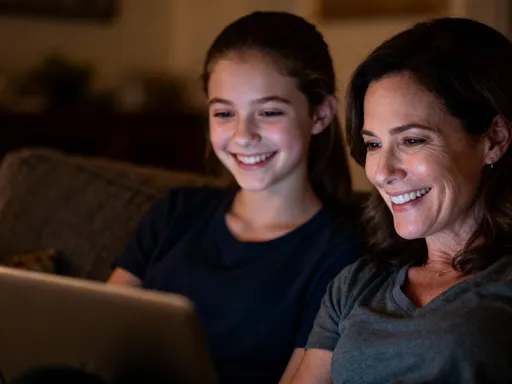
One evening, as she sat curled up on the couch, laughing at something on her tablet, I didn’t ask her to put it down. I just watched. And instead of feeling frustrated, I felt curious. What was so funny? Who was she talking to? What world had she built there that felt safer, easier, more joyful than the one we shared at home? That night, I made a quiet decision: instead of fighting her digital world, I would try to understand it. Not to control it. Not to fix it. But to join it—on her terms.
Discovering Shared Worlds in Unexpected Places
I didn’t know where to start, so I did what any slightly overwhelmed parent does—I went online. I found a parenting forum focused on teens and technology. At first, I just read. Page after page of stories that sounded just like mine. A dad whose son spent hours on a gaming server. A mom whose daughter posted poetry under a pseudonym. A grandmother trying to figure out TikTok so she could see what her granddaughter was sharing. I wasn’t alone. And slowly, I began to see a pattern: the most hopeful stories weren’t about taking devices away. They were about stepping in.
One post stood out. A mother wrote about joining her son’s favorite fan community for a sci-fi show. She didn’t jump in as “Mom.” She created her own username, read the threads, and eventually commented on a theory someone had posted. Her son noticed. He told her, “Hey, that’s actually really smart.” That small moment opened a door. They started talking about the show. Then about other things. Then about life. I read that and felt something shift inside me. What if I could do that too? Not by pretending to be someone else, but by showing up—genuinely, respectfully—as someone who cared about what mattered to him.
The next day, I asked my daughter, “Can you show me where you go online when you’re just… being you?” I tried to keep my voice light, not pushy. She looked surprised, then thoughtful. “You mean like my art page?” she asked. I nodded. “Yeah. I’d love to see it.” She hesitated, then pulled up a website filled with colorful drawings, comments from other users, and little badges next to her username. “This is where I post my fan art,” she said. “People here get it.” I didn’t understand all the references, but I saw something else: pride in her voice. This wasn’t just a distraction. It was a place where she felt seen. And for the first time in months, we had something real to talk about.
Step 1: Listen Before You Log In
One of the biggest mistakes I could have made was rushing in. Creating an account, commenting on her posts, trying to “be cool” all at once. That wouldn’t have built trust—it would have felt like an invasion. So I started with questions. Not interrogations, but real conversations. “What do you like most about this site?” I asked. “The people,” she said. “They don’t judge. And they actually read what you post.” Another time, I asked, “Who makes you laugh here?” She named a few usernames and told me about an inside joke involving a talking cactus. I didn’t get it—but I smiled anyway. And I listened.
Listening first wasn’t just about gathering information. It was about showing her that I respected her world. That I wasn’t there to fix it or critique it, but to understand it. I realized that my child wasn’t hiding online—she was expressing herself. And by asking instead of assuming, I began to rebuild a bridge I hadn’t even realized was crumbling. This step wasn’t about technology at all. It was about empathy. It was about saying, without words, I see you. I care about what matters to you. And that simple act—just listening—opened the door to everything that came after.
It also helped me see that online communities aren’t random or meaningless. They’re built around shared interests, values, and often, deep emotional connections. Whether it’s a group for young writers, a forum for eco-conscious teens, or a fan page for a beloved cartoon, these spaces offer belonging. And as a parent, the most powerful thing I can do is honor that. Not by taking over, but by showing up with curiosity and care.
Step 2: Start Small and Stay Respectful
After weeks of listening, I asked, “Would it be okay if I made an account here? Just to see what it’s like?” I made it clear I wouldn’t post about her, comment on her art, or mention I was her mom. This was about me learning, not her performing. She thought about it, then said, “Okay. But don’t be weird.” Fair enough.
I created a simple username, uploaded a generic profile picture, and spent days just reading. I learned the community rules, the inside jokes, the way people praised each other’s work. I noticed how kind most users were, how specific their compliments were—“I love the shading on the dragon’s wing”—and how much effort people put into their posts. I wasn’t just observing as a parent. I was learning as a person.
When I finally commented, it was on someone else’s drawing—a fantasy landscape with glowing trees. I wrote, “This is stunning. The colors feel like music.” That was it. No follow-up. No pressure. But later, my daughter mentioned it. “I saw you commented. That was nice.” That small acknowledgment felt like a victory. I hadn’t forced a moment. I hadn’t made it about us. But I had shown up in her world—and she noticed.
Respect was everything. I didn’t friend her. I didn’t tag her. I didn’t post anything that would embarrass her. I followed her lead. And slowly, she began to invite me in. She’d say, “You should see this thread,” or “This artist does amazing character designs.” Each time, it felt like a gift. Not because I was gaining access, but because she was sharing something personal. And that trust? It didn’t come from technology. It came from patience, humility, and showing up without an agenda.
Step 3: Find Common Ground, Not Control
I used to think connection meant shared activities—baking together, watching movies, going for walks. And those are beautiful. But I’ve learned that connection can also start with shared interests, even if they seem small. When I noticed my daughter kept drawing characters from an old video game series, I mentioned, “I used to play those games when I was your age.” She looked up, surprised. “No way.” “Way,” I said. “I spent hours trying to beat the final boss.”
That small moment sparked a conversation. She asked me what the game was like. I told her about the pixel art, the chiptune music, the way the world felt endless. She showed me her drawings of the characters, reimagined in her own style. We didn’t play the game together that day. But we talked. And for the first time in a long time, it didn’t feel like I was chasing her attention. It felt like we were meeting in the middle.
Finding common ground wasn’t about taking over her interests or making them about my past. It was about showing that our worlds could overlap. That her passions could connect to mine, and vice versa. I didn’t need to become an expert in digital art or learn every fandom name. I just needed to be open. To say, “This matters to you? Then it matters to me.” And that shift—from control to curiosity, from correction to connection—changed everything.
One evening, she asked, “Do you still have that old game?” I dug out an old console from the closet. We couldn’t get it to work right away, but we spent an hour laughing at the tangled cords and fuzzy screen. We didn’t fix it that night. But we planned to try again. And that planning? That was connection. Not because of the game, but because we were doing it together.
Step 4: Turn Likes into Real-Life Moments
The magic started happening when our online moments began to spill into real life. My daughter shared a meme about pancakes shaped like video game characters. The next morning, I made her breakfast—and yes, I used a cookie cutter to make pixel-style pancakes. She laughed, took a picture, and posted it in her community with the caption, “Mom gets it.” That tiny act—just pancakes—became a bridge. It showed her I was paying attention. That I cared about what made her smile.
Another time, she mentioned a song in a forum thread. I added it to a playlist I was building. Later, I shared it with the family. “This is the soundtrack to my week,” I said. My son started humming it. My husband asked who the artist was. What began as a single click in a digital space became a shared family experience. These weren’t grand gestures. They were small echoes—proof that I was listening, that her world was becoming part of ours.
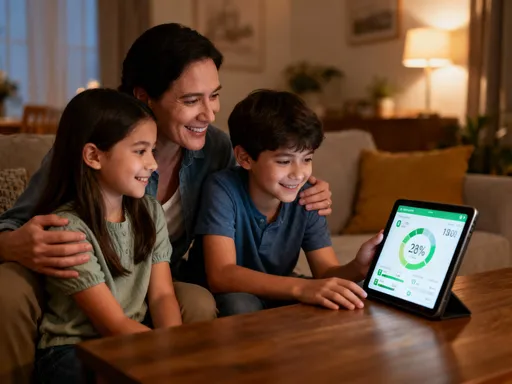
We started a tradition: Friday night “digital share.” Each of us picks one thing we loved online that week—a video, a song, a meme, a post—and shares it with the family. No judgment. No lectures. Just sharing. Sometimes it’s funny. Sometimes it’s thoughtful. Always, it’s connecting. And slowly, the screen isn’t a barrier anymore. It’s a doorway—one we walk through together.
These moments taught me that technology doesn’t have to pull families apart. In fact, it can pull us closer—if we use it with intention. A like, a comment, a shared post—they’re not empty clicks. They’re tiny invitations to connect. And when we respond with love and attention, they become building blocks for deeper relationships.
When It Works: The Quiet Wins That Matter
I won’t lie—this didn’t fix everything overnight. There are still days when my daughter is quiet, when the headphones go on, when the door closes. But the difference is in the small wins. The unprompted “Hey, Mom, you’ve got to see this.” The way she now sometimes sits beside me on the couch, showing me a new art piece or a funny video. The longer conversations that start with “Remember that game you told me about?”
Eye contact has returned. So has laughter. Not because I forced it, but because I found a way in. Online communities didn’t replace our relationship. They gave us a new language for it. One built on respect, shared joy, and genuine curiosity. I’m not her friend in the digital space. I’m her mom. But now, I’m a mom who shows up—not to monitor, but to connect.
And the most beautiful part? She’s started asking about my world too. “What did you post today?” she’ll ask, referring to my own small presence on a gardening forum. “Tell me about your plants.” That reciprocity—that desire to know me—is everything. It means we’re not just coexisting. We’re growing together.
Not Just Staying Connected—Growing Together
What began as a worry—my child disappearing behind a screen—became one of the most meaningful journeys of my parenting life. I didn’t win by taking the phone away. I won by stepping into her world with humility, patience, and love. Online communities didn’t drive us apart. They became the very place where we found each other again.
Technology will keep changing. New apps will come. New platforms will rise and fade. But the need for connection? That stays. And as parents, we don’t have to choose between embracing the digital world and protecting our relationships. We can do both—by showing up, not as critics or controllers, but as curious, caring companions.
You don’t need to become an expert in every game, app, or social network your child loves. You just need to be willing to look, to listen, to say, “Tell me about this. I want to understand.” Because behind every screen is a heart, a mind, a story. And when we take the time to see it, we don’t just stay connected—we grow. Together. One like, one comment, one shared laugh at a time.