Walking into a pitch-black house after a long day used to spike my anxiety—tripping over shoes, scaring the kids, or worse, not seeing something (or someone) who shouldn’t be there. I used to think smart lighting was just about looking fancy or saving energy. But when I finally installed safety-focused lights in key spots around my home, everything shifted. It wasn’t just about brightness—it was about peace of mind, routine, and how often we interact with these small moments. What surprised me most wasn’t the tech itself, but how using it daily made it feel like second nature. The more I relied on it, the more it faded into the background—like a quiet guardian. This is no longer just a gadget; it’s become part of how my family moves through our home, safely and confidently. If you’ve ever hesitated because it seemed too complicated or unnecessary, let me tell you—this small change did more than light up rooms. It lit up my sense of security.
The Moment I Realized My Home Wasn’t as Safe as I Thought
It was a rainy Thursday night. I’d picked up the kids late from a friend’s house, dropped them off, and then headed back out to grab groceries. By the time I pulled into the driveway, it was nearly 9:30 p.m. The streetlights were flickering, and our front yard was completely dark. I grabbed my bags, fumbled for the house key, and stepped inside—only to be met with total silence and pitch-blackness. I remember setting the groceries down and reaching for the wall switch, but before I could find it, I heard a soft thud from the hallway. My heart jumped. Was someone there? I stood frozen, one hand on the door, the other shielding my body. It turned out to be our cat knocking over a basket—but in that moment, the fear was real.
That night, I couldn’t shake the feeling of vulnerability. I thought our home was safe. We live in a quiet neighborhood, the doors are always locked, and we’ve never had an incident. But darkness changes everything. It distorts shapes, muffles sounds, and makes the familiar feel foreign. I realized I’d been relying on the idea of safety, not actual systems that supported it. And I wasn’t alone. A few days later, I mentioned it to a friend during our weekly coffee walk. She nodded and said, “I always leave a lamp on now. Even if I’m not home, I want it to look lived-in.” Another friend confessed she keeps her porch light on all night, just so she doesn’t have to walk into the dark when she gets back from work.
It made me wonder—how many of us are just one dark hallway away from feeling unsafe? Especially women, parents, and those living alone, that moment of stepping into the unknown can trigger a deep, instinctive fear. And yet, lighting is one of the most overlooked parts of home safety. We invest in locks, cameras, and alarms, but we forget that visibility is the first line of defense. That night didn’t just scare me—it woke me up. I decided it was time to stop pretending the darkness wasn’t an issue. I wanted to see. I wanted to feel in control. And most of all, I wanted my home to greet me—not with silence and shadows, but with warmth and welcome.
From Skeptic to Believer: Why I Gave Safety Lighting a Second Look
If I’m honest, I wasn’t always excited about smart home tech. When I first heard about motion-sensor lights and app-controlled bulbs, I rolled my eyes. “Isn’t that just for people who love gadgets?” I thought. I pictured complicated setups, confusing apps, and lights that turned on at the wrong time—like waking up the whole house because a squirrel ran past the backyard. I also assumed it would be expensive. I imagined hiring an electrician, rewiring parts of the house, and ending up with a bill that made me regret the whole idea. So for months, I kept putting it off, telling myself, “It’s not that big of a deal. I’ll just keep using the switch.”
But then I started noticing how many people around me were quietly using these tools. My neighbor Mary, who’s in her 60s and not what you’d call “tech-savvy,” showed me how her garage light turns on automatically when she walks in. “No more fumbling with keys,” she said with a smile. Another mom at school mentioned she uses smart bulbs in her kids’ rooms so they can fall asleep with soft light and wake up to a gentle glow. I started doing a little research—nothing too deep, just browsing reviews and watching short videos. What I found surprised me: most safety lighting systems today are designed for real life, not for tech geeks. They’re simple, affordable, and easy to install. No wiring. No special tools. Just plug, place, and go.
I learned there are three main types that make a real difference: motion-sensor lights, pathway lighting, and smart bulbs. Motion-sensor lights turn on when they detect movement—perfect for entryways, backyards, and hallways. Pathway lighting guides you safely from the car to the front door, especially helpful on uneven walkways or steps. And smart bulbs let you control brightness and color from your phone or with voice commands, so you can set the mood or turn lights on remotely. None of this requires a degree in engineering. In fact, the whole point is to make life easier, not more complicated. I realized I’d been judging the idea based on outdated assumptions. This wasn’t about showing off cool tech—it was about creating a home that works for you, not against you. And that’s when I decided to give it a real try.
The First Setup: No Tools, No Stress, Just Light
I started small—no major overhaul, no pressure. I bought two motion-sensor lights: one for the entryway and one for the back patio. I also got a smart bulb for the hallway, the one my kids always complain about being “too dark at night.” The whole thing cost less than $60, and I didn’t need to call anyone for help. The motion lights were battery-powered and came with adhesive strips, so I just cleaned the wall, stuck them on, and adjusted the angle. The smart bulb screwed in just like a regular bulb. I downloaded the app, connected it to our Wi-Fi, and followed the step-by-step setup. It took less than 20 minutes—seriously, easier than assembling a new coffee maker.
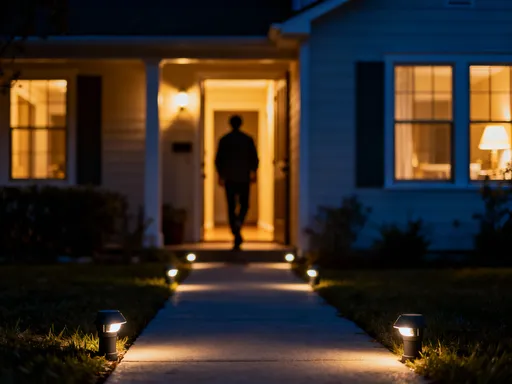
That first night, I tested everything. I walked up to the front door with my arms full of groceries, and before I even reached for my keys, the entry light turned on. I actually laughed out loud. It felt like the house was saying, “Welcome back.” I did the same at the back door—stepped onto the patio, and the light came on automatically. No more tripping over the garden tools or scaring the cat. Inside, I set the hallway bulb to turn on at 50% brightness when motion was detected between 8 p.m. and 6 a.m. When my daughter got up to get water at night, the light gently came on, not too bright, not too sudden. She said, “Mom, this is way better than the old one that blinded me.”
What struck me most was how immediate the relief was. I didn’t have to remember to turn lights on. I didn’t have to worry about leaving them on all night and wasting energy. The system just worked. And it wasn’t perfect—sometimes the motion sensor picked up the neighbor’s dog, and the light flicked on—but those moments were rare and never annoying. Within a week, flipping a switch felt like an old habit. I realized I wasn’t just adding technology; I was removing friction. And that made all the difference.
How Daily Use Transformed My Home Life
At first, I noticed the lights every time they turned on. It felt new, exciting, a little futuristic. But after a few weeks, something unexpected happened—they became invisible. Not literally, of course, but in the way they faded into the background of daily life. That’s when I realized true technology success isn’t when you notice the gadget, but when you stop noticing it because it just works. The entry light turns on. The hallway glows. The backyard illuminates. It’s not magic—it’s routine. And routine is where safety lives.
My kids adapted quickly. My son, who used to yell, “Mom, the light’s not working!” every time he went to the bathroom at night, now walks confidently down the hall. My daughter stopped asking me to leave her door open for light. “The light comes on by itself,” she said, like it was the most natural thing in the world. Even our elderly dog, who gets confused in the dark, seems calmer at night. But the biggest change was emotional. I no longer tense up when I come home late. I don’t scan the shadows. I don’t hold my breath. That constant low-level anxiety—gone. I feel more in control, more present, more at peace.
When my parents visited last month, they noticed the difference too. My mom, who has trouble with balance, said she felt much safer moving around at night. “I can see where I’m going,” she said. “No more guessing if there’s a step or a rug in the way.” My dad, who’s always been cautious, appreciated the motion light on the back deck. “It’s not just about intruders,” he said. “It’s about not breaking your neck on the stairs.” And he’s right. Safety isn’t just about fear—it’s about dignity, independence, and comfort. The more we used the lights, the more they became part of our rhythm. They didn’t change our home—they improved how we live in it.
Beyond Security: The Unexpected Emotional Benefits
I thought the biggest benefit would be feeling safer. And it is. But what I didn’t expect was how much better our home felt. There’s a warmth now, a sense of care. The lighting isn’t just functional—it’s emotional. I started playing with the smart bulb settings, adjusting the color temperature. In the evenings, I set it to a warm, soft glow—like candlelight, but steady. It’s calming. My kids fall asleep faster. I feel less stressed when I walk through the house at night. It’s not just about seeing; it’s about how the light makes us feel.
I also started using the timer feature. Every evening at 7 p.m., the hallway light turns on at 30% brightness. It’s subtle, but it signals the shift from day to night. It’s like a gentle reminder: slow down, breathe, it’s okay to rest. On weekends, I use a sunrise simulation in the living room—soft light that gradually brightens, helping us wake up naturally. My husband said, “I didn’t think a light could make mornings better. But it does.”
And then there’s the quiet act of care. I leave the porch light on when my teenager is out late. Not because I’m worried about crime, but because I want her to know someone is thinking of her. It’s like saying, “We’re here. You’re welcome. Come home.” That light isn’t just a bulb—it’s a message. I realized that lighting can be love in action. It’s the modern version of leaving a key under the mat or a note on the fridge. It’s small, but it matters. And in a world that often feels rushed and disconnected, those small moments of connection are everything.
Making It Work for Any Home: Simple Tips Anyone Can Try
You don’t need a big budget or a tech degree to make this work. Start where you feel most vulnerable. For me, it was the front entry. For you, it might be the stairs, the kitchen at night, or the path to the garage. Think about the moments when you’ve stumbled, hesitated, or felt uneasy. That’s your starting point. Motion-sensor lights are your best friend. Place them at entry points—front and back doors, garages, and along walkways. Look for ones with adjustable sensitivity so they don’t turn on every time a leaf blows by.
When choosing bulbs, pay attention to color temperature. Warm white (2700K–3000K) is cozy and calming—perfect for bedrooms and hallways. Cool white (4000K–5000K) is brighter and more alert—good for kitchens and workspaces. You don’t need smart bulbs everywhere. Start with one or two in high-traffic areas. Use timers to automate lights during evening hours, so your home feels lived-in even when you’re out. And don’t forget outdoor lighting—solar-powered pathway lights are affordable and easy to install. They create a safe, inviting path without any wiring.
If apps feel overwhelming, start with simple plug-in motion lights. Many work right out of the box with no setup at all. You can always add more features later. The key is to begin small and build over time. Think of it like upgrading your home one step at a time. And remember, this isn’t about perfection. It’s about progress. Even one well-placed light can make a difference. I started with two lights and one bulb. Now, I have a system that covers the whole house—but I didn’t get there overnight. Every change added up. And each one made life a little easier, a little safer, a little more peaceful.
A Home That Knows You: When Technology Becomes Part of Your Life
Looking back, I realize I didn’t just install lights—I created a home that responds to us. It’s not cold or robotic. It’s warm, intuitive, and quietly supportive. The technology didn’t take over; it settled in. It became part of our rhythm, like morning coffee or bedtime stories. I no longer think about the motion sensor or the app. I just live. And that’s the quiet power of good design: it serves without demanding attention.
This journey wasn’t about fear. It was about care. About wanting my family to move through the world—starting with our home—with confidence and ease. It was about replacing anxiety with assurance, darkness with dignity. And it was about realizing that technology, at its best, doesn’t complicate life—it simplifies it. It doesn’t isolate us—it connects us. It doesn’t feel cold—it feels like home.
If you’ve ever stood in the dark, heart pounding, wondering what’s ahead—know this: you don’t have to stay there. A small change can bring a big shift. You don’t need to do everything at once. Just one light. One step. One moment of saying, “I deserve to feel safe.” Because you do. And when your home begins to meet you with light, with warmth, with welcome—that’s not just technology. That’s peace. And that’s something worth turning on.